
Real Time Booking: Is it for you?
I was out for four days recently examining four companies who are seeking to provide Yorkshire with a Destination Management System (DMS). DMS=a collection of computerised information interactively accessible about a destination. They typically include information on attractions and facilities and often incorporate the ability to undertake some reservations.
I was asked with others to provide an accommodation providers perspective on any online accommodation booking system offered by the respective companies.
With colleagues on the panel we agreed with my long held belief that nirvana for us was to update ONE online booking system and have as many channels (agencies) open to sell the accommodation as possible. So update ONE booking engine and be able to sell through Visitbritain, Hotels Online, Lastminute.com, Active Hotel, and up to 50 other recognised agencies.
To most smaller serviced accommodation providers I suspect that 24/7 reservations via a website can seem a little intimidating. On this page I hope to explain a little more about online booking systems and why I think they are the future and not to be feared.
Real-time bookings is industry jargon for being able to accept bookings via a web link 24 hours a day 7 days a week. There are two was to achieve this.
Room Allocation. How it works.
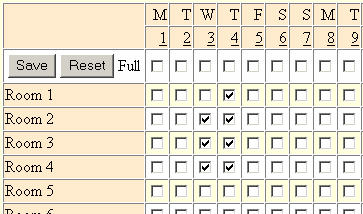
This system employs a remote server i.e. bookings are taken on a computer somewhere in cyberspace. In this model you set aside a number of rooms, one, two, three--to all of your available rooms and sell them via a website/DMS. You choose the number of rooms you sell online, the 'lock out' dates (no rooms available) the pricing structure and how you receive notification of the booking.
It is possible to organise this without a website and if you have a good service provider without a computer, although it is infinitely easier and more responsive if you have one. Once the room is booked it is deleted from the system (the online booking engine).
You know therefore that that room will not be double booked and if you have chosen to receive advice of the booking via an immediate contact channel, possibly as an SMS text message, you can rule it out in your diary very quickly. It is of course your responsibility to update your availability and lock out dates if you are full at busy times. If you leave the room available even when you are full i.e. you fail to update and it is sold 'twice' it can cause some issues but if you only put part of your room stock online you can usually rest easy knowing that over booking will not occur.
Most small operators usually try this method first to see how it works and whether they can cope with the protocol of operation.
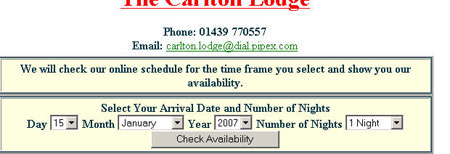
It is possible to put ALL your room stock on 'allocation' BUT every time you need to make a reservation when the telephone or fax rings or an email enquiry come you have to go online (you therefore need a computer) to make the booking the same way as a customer does. This keeps your availability up to date and ensures that you have no double bookings. It is here this system starts to fall apart. What if your internet connection goes down? What if you accept a booking without checking and find when you go online you have no availability? Do start to see the picture?
An example:
You place two rooms with a service provider say Visitbritain, you set the price and availability and you sell through your listing on their website. When a potential client interrogates the system they put in the dates they wish to stay, the style of room they require and the booking engine offers them your accommodation availability. If they book you receive some communication SMS Text Message, Fax, Telephone Call or Email etc advising of the booking so you can fill in the dates in our diary. You pay a fee to the agent (could be Visitbritain) which will usually include a small fee for them to take the deposit and you have a secure booking and the customer is duly advised of a confirmed reservation usually by email.
This is selling via 'room allocation' in other words you have to allocate a number of rooms to the system and it relies on you to update the system to ensure that no double bookings are taken.
Real Time Booking: How it Works
Although there are some similarities between an allocation based booking system and a real time system the Real Time system is generally accepted as a fully automated protocol which does everything automatically including updating you diary.
Although you can, on an allocation system, run bookings 24/7 it does have limitations as described above, i.e. you need to manually update the system, either your in house manual diary system or your online facility. Either way the system requires YOU to make it work.
Real time booking incorporates a product called a Property Management System (PMS) which can best be described as an computer operated bookings diary. So with any system you buy you will have a programme that runs on your PC which you can access anytime to take bookings over the telephone or vial email fax etc. Here is where it starts to differ from the Allocation system because also running somewhere in cyberspace on a server (large computer) will be an identical programme to the one you operate in your business. The clever part is that the two copies of the programme communicate with each other, usually automatically as many times as is appropriate and transfer confirmed bookings from each copy of the programme. This happens seamlessly and in real time , hence the name. So the diary you operate in your B&B updates the booking engine computer and vice versa so you never over book and the whole process is fully automated.
An Example:
You purchase a PMS and put all your rooms into your computerised diary. You upload that information to the server. You accept a booking over the telephone and book the client in using the protocol you set, name, address, credit card details, when they are coming, etc etc. Once the reservation is listed the system copies the information to the server thereby locking it out for further sale on the dates booked. A little later a booking is received from another client via the internet who agrees to book, the remote system simultaneously interrogates both diaries and accepts the reservation. Because the two diaries are linked via the internet and use the same protocol to accept bookings both systems are updated immediately. You might not actually be there when your bookings come in, but as long as the remote programme can access your dairy (PC) it will continue to accept bookings knocking the rooms out of the diary as it does so, so there is no chance of double booking either by you or via the internet.
Recent reduction in prices of PMS's and more channels through which to sell your accommodation mean that both systems are more affordable now for B&B's than they have ever been.
It is true that there are costs to buying and setting up the system but these have to be factored against the business received. I have yet to meet a B&B operator who was not happy to pay a commission on a confirmed booking. What we don't like doing is paying for a web listing somewhere and receiving no exposure.
Your local Tourist Board (if you still have one) or your Local Authority if it helps organise Tourism in your area should be able to help you further. If you belong to a Tourism Association maybe its something you should be discussing.
Remember Cumbria and 31% of accommodation bookings coming online in 2006 and ask how many will be coming online in 2008?
Questions on 'online bookings' can be posted on the discussion board.